
In high-end manufacturing sectors such as medical devices, automotive components, and consumer electronics, mold selection directly impacts cost, efficiency, and product quality.
Choosing the wrong tooling can lead to unbalanced filling, increased scrap rates, or unnecessary upfront capital expenditure.
This article provides a professional analysis of Single-Cavity, Multi-Cavity, and Family Molds to assist you and engineering teams in selecting molds for your specific project lifecycles.
What Are Single, Multi-Cavity, and Family Molds?
What is a Single-Cavity Mold?
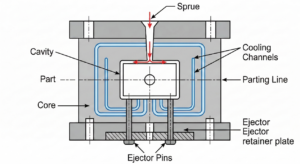
A single-cavity mold is the most basic tooling configuration, where the mold produces exactly one part per injection cycle. It consists of one “negative” impression of the part within the tool.
What is a Multi-Cavity Mold?
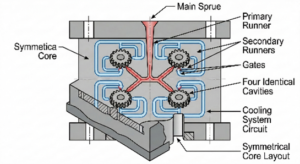
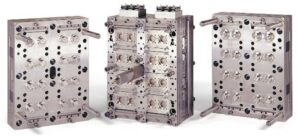
A multi-cavity mold features multiple impressions of the same part within a single tool. This allows the machine to produce two, eight, or even hundreds of identical parts in a single cycle.
What is a Family Mold?
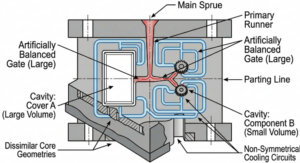
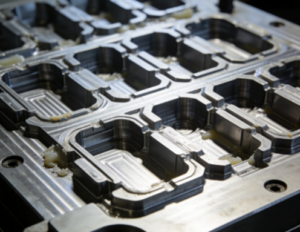
A family mold (or family molding) is a specialized tool that contains multiple cavities for different parts that belong to the same product assembly. For example, a single family mold might produce both the top and bottom housing of a remote control at once.
Single vs. Multi-Cavity vs. Family Molds: What’s the Difference?
Selecting the right tool requires balancing upfront “Class” investment (SPI standards) against the long-term Piece Price. The following table compares the primary characteristics of each mold type:
| Mold Type | Primary Advantages | Major Disadvantages | Best Applications | Real-World Example |
|---|---|---|---|---|
| Single-Cavity | Lowest upfront cost; easier to control precision and cooling. | High cost per part; slow production for high volumes. | Prototypes and low-volume industrial parts. | Large automotive dashboard panels. |
| Multi-Cavity | Massive throughput; lowest per-part price; highly automated. | High initial investment; complex runner and cooling needs. | High-volume consumer and medical goods. | Disposable medical syringes. |
| Family Mold | Reduced tooling cost for assemblies; parts stay in “sets.” | Difficult to balance flow; requires identical materials/thickness. | Mid-volume kits and multi-part assemblies. | A child’s toy with 3 matching components. |
How Do I Optimize An Injection Mold Design?
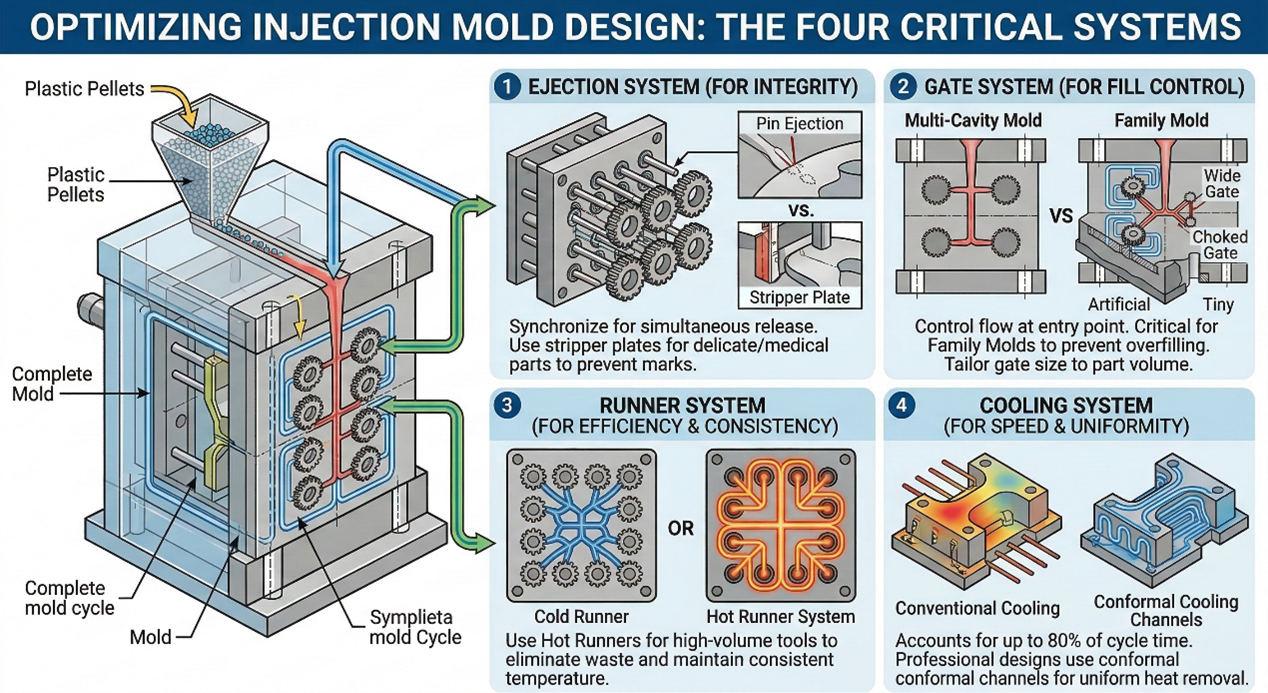
To optimize an injection mold, you must synchronize the four critical systems: Ejection, Gate, Runner, and Cooling. Each must be tailored to the mold type to ensure part integrity and cycle efficiency.
- Ejection System Design: In multi-cavity tools, ejection must be perfectly simultaneous to prevent part warping. For delicate medical parts, stripper plates are often preferred over pins to avoid marking.
- Gate System Design: The gate is where the molten resin enters the cavity. Family molds require careful “gating” to ensure a small part doesn’t overfill before a larger part in the same tool is finished.
- Runner System Design: This is the “highway” for the plastic. Multi-cavity molds often utilize Hot Runner systems to reduce waste and maintain consistent temperature across all cavities.
- Cooling System Design: Cooling accounts for up to 80% of the cycle time. Professional designs use conformal cooling channels that follow the part’s geometry to ensure uniform heat removal.
Which Injection Mold is Best for My Production Volume?
The best injection mold is determined by your annual volume and part geometry:
- Single-Cavity: For <10,000 parts
- Multi-Cavity: For high-volume identical parts
- Family Molds: For related assembly sets using the same material.
Low-Volume or Complex Parts → Single-Cavity Mold
If you are in the R&D stage or producing specialized industrial components with annual volumes under 5,000–10,000 units, the single-cavity mold is the most logical choice. It allows for tighter tolerance control and lower financial risk if the design requires updates.
High-Volume Identical Parts → Multi-Cavity Mold
When your project demands hundreds of thousands of identical units (such as Class 101 medical components), the multi-cavity mold is essential. While the upfront cost is higher, the “economies of scale” drastically reduce the unit price.
Medium-Volume Assembly Parts → Family Mold
If you are manufacturing a product that requires 3–5 different plastic parts made of the same resin (e.g., ABS or Polypropylene), a family mold reduces your total tooling investment. However, ensure that the wall thicknesses are similar across all parts to avoid “flash” or “short shots.”
Contact Livepoint for Pro. DFM Analysis
Would you like a professional DFM (Design for Manufacturing) analysis for your next project?
Livepoint specializes in high-precision tooling for the most demanding sectors.
[Contact our engineering team today] for a detailed quote and mold selection consultation.