

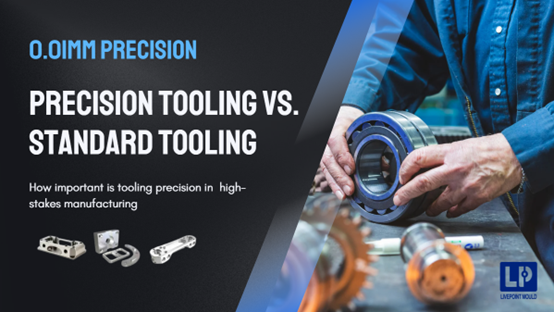
In high-stakes manufacturing, the difference between a successful product launch and a costly recall often comes down to a measurement thinner than a human hair: 0.01mm.
While “standard” tolerances are sufficient for many consumer goods, industries like medical technology and automotive electronics operate in a range where “close enough” is a failure.
Is 0.01mm Precision Actually Necessary?
The short answer is: Yes, it is critical. In sectors like medical device manufacturing or automotive sensor production, 0.01mm is a safety requirement.
For instance, consider a surgical robotic joint or a glucose monitor housing. A deviation of just 0.01mm can prevent a hermetic seal, leading to moisture ingress and device failure.
Similarly, in the automotive world, LiDAR and radar sensor housings must maintain sub-micron alignment to ensure autonomous driving systems correctly interpret distance.
A tiny error in the tool used to create these housings results in “stack-up errors” that render the final assembly useless.
Prevision Matters for Lifespan & Performance
Precision affects the long-term viability of your production in the following aspects:
Interchangeability and Assembly
In mass production, parts must be perfectly interchangeable. If your precision tooling allows for even a 0.02mm drift, components from Batch A may not fit components from Batch B. This leads to friction, premature wear, and assembly line bottlenecks.
The “Flash” Phenomenon
In injection molding, a 0.01mm gap in the mold’s parting line is enough for molten plastic to escape, creating “flash” (excess material). Not only does this require manual trimming, which will increase costs, but it also indicates that the mold halves are not distributing pressure evenly, which drastically shortens the mold’s lifespan.
Vibration in CNC Machining
During CNC precision machining, a 0.01mm deviation in tool holder alignment or spindle runout can induce harmonic vibrations. These vibrations cause “chatter marks” on the surface finish and accelerate tool wear, turning a high-speed process into an inefficient one.
When is Standard Tooling “Good Enough”?
You might wonder if 5-axis CNC or ultra-precision tooling is overkill for every project. The answer depends on your part’s function and volume.
| Standard Tooling | Precision Tooling | |
| Typical Tolerance | ±0.1mm to ±0.05mm | ±0.01mm to ±0.001mm |
| Best For | Large consumer parts (housing, lids) | Critical internals, sensors, medical gear |
| Material Impact | Soft plastics, aluminum | Hardened steels, exotic alloys |
| Lifespan | 50,000 – 100,000 cycles | 1 million+ cycles (High-durability) |
If you are manufacturing a large, non-mechanical plastic cover for a household appliance, standard tooling is “good enough” and more cost-effective. However, if the part involves sliding fits, seals, or high-speed rotation, precision is mandatory.
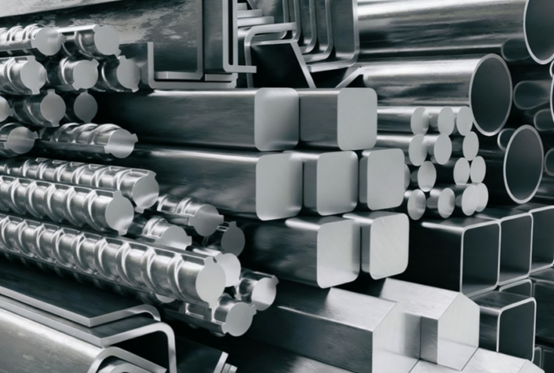
Machining Hardened Steel Without Distortion: The EDM Solution
When working with hardened tool steels (often used for the longest-lasting molds), traditional CNC milling reaches a limit. The mechanical force of the cutter can cause heat-induced distortion or tool breakage.
EDM (Electrical Discharge Machining) is the gold standard for achieving 0.01mm precision in these “impossible” materials. Unlike CNC, EDM cutting is a non-contact process that uses electrical sparks to erode material.
- No Mechanical Stress: Because the “tool” (an electrode or wire) never touches the workpiece, there is zero mechanical pressure. This prevents the distortion commonly seen in thin-walled hardened parts.
- Complex Geometries: EDM machines can create sharp internal corners and deep, narrow slots that a rotating CNC bit simply cannot reach. This makes it the go-to for small precision tools and intricate mold cores.

Partnering for Precision with Livepoint
At Livepoint, certainty is the cornerstone of our service. With over 23 years of expertise and a track record of 10,000+ finished projects, we specialize in bridging the gap between a design concept and a high-performance reality.
Our facilities are ISO 9001 and IATF 16949 certified, ensuring that every CNC precision machining job and EDM cutting sequence meets the rigorous standards of the medical and automotive industries.
Whether you need rapid prototyping or a mold designed for 10 million cycles, our team ensures that 0.01mm is always working in your favor.
Ready to start your precision project? Contact Livepoint today for a comprehensive DFM report and quote.



 English
  Chinese
  German
  Italian
  Spanish
  French
  Russian
  Arabic
  Japanese
  Korean