

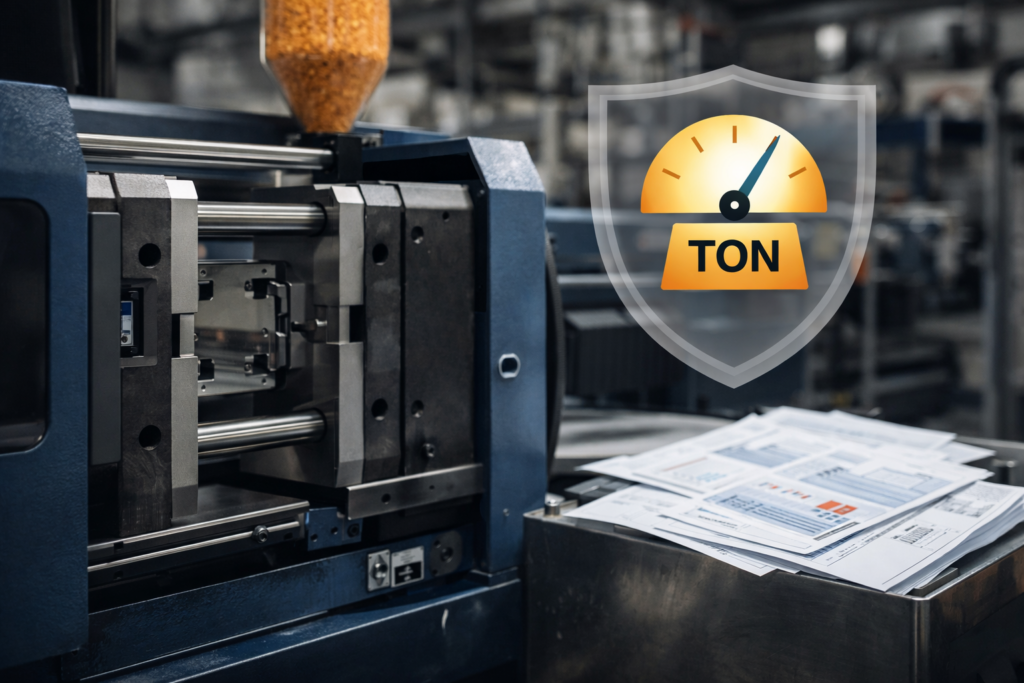
Choosing the right machine tonnage is an important part of injection molding planning. If clamp force is too low, the mold may open slightly during filling and cause flash, dimensional instability, or poor part quality. If clamp force is too high, the machine may be larger than necessary, which can increase cost and limit production flexibility.
An Injection Molding Tonnage Calculator helps estimate the clamp force required for a given part and then relates that value to machine tonnage. It is a practical starting point for mold planning, machine screening, and quotation-stage evaluation. Below, we will look at how to use the calculator, what each input means, and how clamping force is calculated in injection molding.
How to Use the Injection Molding Tonnage Calculator
Step 1: Enter Part Dimensions or Projected Area
Most tools allow two input methods. The first is to enter part length and width. The second is to enter projected area directly. If projected area is already known from the parting line view, that is usually the more accurate starting point.
For users searching how to calculate clamping force in injection molding, this is the first key step: the calculator needs the part area that resists mold opening force during injection.
Step 2: Select the Number of Cavities and Material
After the area is entered, the next step is cavity count. A one-cavity mold and a four-cavity mold may use the same part geometry, but the total projected area and required clamp force will be very different.
Material selection also matters. Different resins have different flow behavior, pressure demands, and molding conditions. This is why injection molding clamping force calculation should not rely only on part size.
Step 3: Adjust Fill Pressure, Wall Thickness, and Runner Type
A more practical clamp force calculator injection molding setup includes pressure and process-related factors. Fill pressure influences cavity pressure directly. Wall thickness can affect the process window, especially for thin-wall or thick-wall parts. Runner type matters because cold runner systems often require extra allowance compared with hot runner systems.
These adjustments make the estimate more useful than a fixed rule of thumb.
Step 4: Review the Estimated Clamp Force and Recommended Machine Tonnage
Once the data is entered, the calculator returns an estimated clamp force and a suggested machine tonnage range. This helps users quickly move from clamping force calculation injection molding to machine screening.
The result should be treated as a practical estimate, not a final engineering sign-off.
What the Calculator Inputs and Results Mean
Projected Area
Projected area is the area of the part as seen from the mold opening direction. In simple terms, it is the shadow of the part on the parting line plane. This is one of the most important values in injection molding machine clamping force calculation.
Number of Cavities
The number of cavities multiplies the total projected area. If one cavity requires a certain clamp force, multiple cavities usually raise the total requirement in proportion to the total filled area.
Material Type
Different materials do not fill the same way. Some flow more easily at lower pressure, while others require higher pressure or tighter process control. Material choice affects how aggressively the cavity pressure loads the mold.
Fill Pressure
Fill pressure is one of the most direct inputs in clamp force calculation injection molding. Higher cavity pressure generally means higher mold-opening force, which increases clamp force demand.
Wall Thickness
Wall thickness affects mold filling behavior. Thin-wall parts may require higher injection pressure because the melt must travel quickly through narrow sections. Thick-wall parts may also need a broader process margin because of pressure variation and cooling behavior.
Runner Type
Hot runner and cold runner systems do not behave identically. Cold runners often add material flow resistance and may increase the required margin in calculate clamp force injection molding work.
Safety Margin
A safety margin helps account for process variation, pressure spikes, and practical manufacturing conditions. A calculated value may be technically correct in theory, but a small buffer is often needed in real production.
Estimated Clamp Force and Machine Tonnage
The calculator usually outputs a required clamp force and then rounds up to a practical machine tonnage. This helps users connect the engineering estimate to real equipment selection.
When a Calculator Is Useful—and When Engineering Review Is Still Needed
A calculator is especially useful for:
- quick estimation
- quotation-stage evaluation
- early machine screening
- initial mold planning discussions
However, engineering review is still important for:
- thin-wall parts
- multi-cavity precision molds
- engineering resins
- large projected area parts
- tight tolerance requirements
In these cases, the calculator is still helpful, but the final decision should include mold structure, gate design, runner layout, venting, machine capability, and trial conditions.
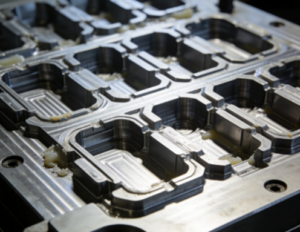
How to Calculate Clamping Force in Injection Molding
Basic Formula
A simplified approach to calculate clamping force injection molding is:
Clamp Force = Total Projected Area × Cavity Pressure
If projected area is measured in square inches and cavity pressure is measured in pounds per square inch, the result can be converted into machine tonnage.
This is the foundation behind many versions of clamping force calculator injection molding tools.
Converting Clamp Force to Tonnage
In many practical calculations, the result is converted into tons by dividing the force value by 2,000. This is why machine size is often discussed in tonnage rather than pounds of force.
That conversion helps bridge the gap between clamping force calculation injection molding and actual machine selection.
Why Real-World Calculations Need Adjustments
The basic formula is useful, but real production rarely depends on only two variables. Material type, fill pressure, wall thickness, runner system, and process safety margin all affect the actual load placed on the mold.
That is why more complete injection molding clamping force calculation methods include adjustment factors instead of using one universal value for every part.
Why Accurate Clamping Force Calculation Matters
Accurate calculation matters because clamp force affects both part quality and production efficiency. If the estimate is too low, the mold may not stay fully closed during filling, especially in high-pressure or multi-cavity conditions. This can lead to flash, unstable dimensions, or extra mold wear.
If the estimate is too high, the selected machine may be larger than needed. That can raise production cost and reduce flexibility in scheduling or machine utilization. A sound clamp force calculator injection molding method supports better planning before trial production begins.
What Is Clamp Force in Injection Molding?
Clamp force is the force used to keep the mold closed while molten plastic is injected into the cavity. During filling and packing, the resin generates cavity pressure that pushes outward on the mold halves. The clamping unit must resist that force.
In daily factory language, clamp force is often linked directly to machine tonnage. However, the engineering requirement comes first, and the machine rating is the practical equipment response to that requirement.
Why Accurate Clamping Force Calculation Matters
Accurate calculation matters because clamp force affects both part quality and production efficiency. If the estimate is too low, the mold may not stay fully closed during filling, especially in high-pressure or multi-cavity conditions. This can lead to flash, unstable dimensions, or extra mold wear.
If the estimate is too high, the selected machine may be larger than needed. That can raise production cost and reduce flexibility in scheduling or machine utilization. A sound clamp force calculator injection molding method supports better planning before trial production begins.
What Is Clamp Force in Injection Molding?
Clamp force is the force used to keep the mold closed while molten plastic is injected into the cavity. During filling and packing, the resin generates cavity pressure that pushes outward on the mold halves. The clamping unit must resist that force.
In daily factory language, clamp force is often linked directly to machine tonnage. However, the engineering requirement comes first, and the machine rating is the practical equipment response to that requirement.
Key Factors That Affect Injection Molding Clamping Force Calculation
- Projected Area: A larger projected area creates a larger surface for cavity pressure to act on, increasing opening force.
- Number of Cavities: More cavities increase total projected area and often increase balancing complexity at the same time.
- Material Type: High-performance or engineering materials may require different pressure ranges than commodity resins.
- Fill Pressure: Pressure has a direct effect on clamp force demand, which is why this factor should be handled carefully.
- Wall Thickness: Thin-wall parts may need aggressive filling pressure, while thicker parts may still require broader process allowance.
- Runner System: Cold runners can increase pressure loss and may justify a higher clamp force margin compared with hot runner systems.
- Safety Margin: A safety margin is useful for practical machine selection, especially when real process conditions may vary from ideal assumptions.

Common Mistakes in Clamp Force Calculation
One common mistake is using overall part dimensions instead of projected area. Another is forgetting to multiply by cavity count. Some users also apply one pressure level to every material, which can distort the estimate.
Another frequent issue is ignoring safety margin. Even if the base formula is correct, process variation can still make the selected tonnage too tight. Finally, users may focus only on clamp force and forget other machine limitations such as shot size, tie-bar spacing, and mold size.