

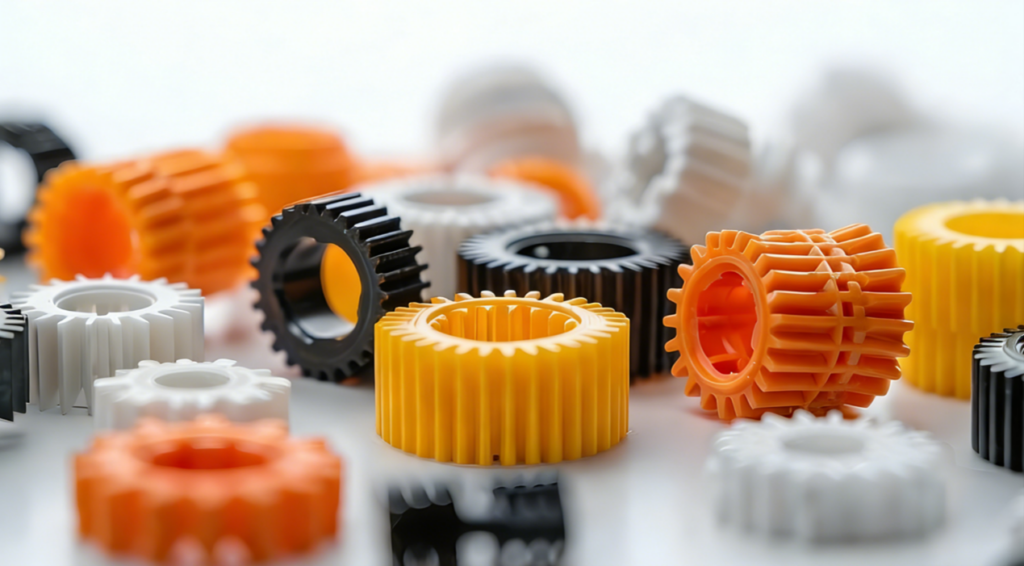
Admit it, a single material is rarely enough to meet the demands of both performance and aesthetics. Today’s products must be rugged yet comfortable, waterproof yet breathable, and complex yet easy to assemble.
This has led to the rise of multi-material manufacturing, sparking a common debate for R&D engineers: Overmolding vs. Insert Molding. Deciding between these two processes is a critical fork in the road of the injection molding of plastics.
Keep reading, this blog will give you some hints on deciding between these two processes.
Key Takeaways of this blog:
- Overmolding is the “plastic-on-plastic” choice, ideal for ergonomics, soft grips, and aesthetic layering.
- Insert Molding is the “functional integration” choice, combining plastic with metal or electronic components to eliminate secondary assembly.
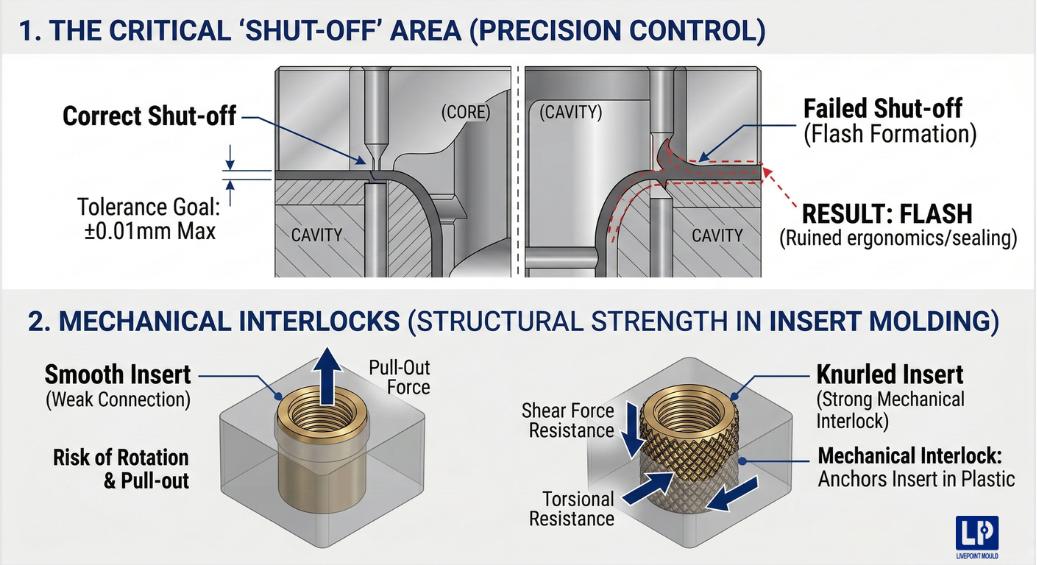
- Bonding Mechanisms: Overmolding relies on chemical compatibility, whereas insert molding often requires mechanical interlocks (like knurling) for structural strength.
- Cost Trade-offs: Overmolding has higher upfront tooling costs but lower labor costs; Insert molding is the opposite.
- Precision is the Foundation: Success hinges on ±0.01mm tolerances at the “shut-off” area to prevent flash and leaks.
What is Overmolding? (The “Plastic-on-Plastic” Solution)
Simply put, it is a process where a second layer of material is molded over a pre-existing part (the substrate). Typically, this involves molding a soft elastomer (like TPE or TPU) over a rigid plastic base (like ABS or PC).
There are two primary ways to execute the overmolding process:
- 2-Shot Injection Molding: This uses a specialized machine with two independent injection units. The machine rotates the mold, allowing the second material to be injected immediately after the first, ensuring a superior chemical bond.
- Pick-and-Place (Manual Overmolding): A substrate is molded in one machine, then manually or robotically moved to a second mold where the overmold is applied. This is often more cost-effective for lower-volume production.
The Human-Centric Advantage:
Overmolding is the gold standard for ergonomics. It provides the soft-touch grips on power tools, vibration dampening in automotive steering components, and waterproof seals for medical handheld devices.
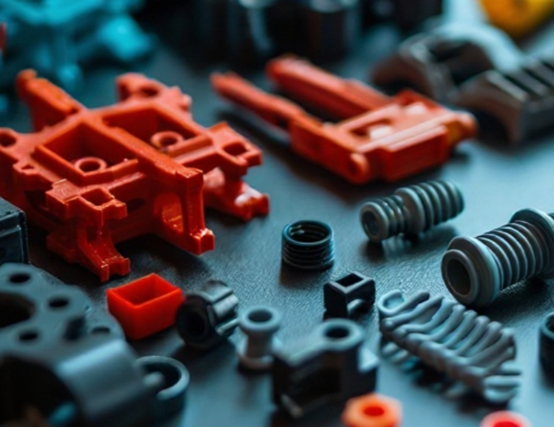
What is Insert Molding? (The “Functional Integration” Solution)
While overmolding focuses on “layering,” insert plastic molding focuses on “integration.” This process involves placing a non-plastic component, usually metal, ceramic, or electronic, into the mold cavity before the plastic is injected.
Custom insert molding is widely used to incorporate:
- Metal Threads and Bushings: For high-strength mechanical fasteners in automotive housings.
- Encapsulated Electronics: Protecting sensors from harsh environments in New Energy vehicles.
- Surgical Blades: Creating seamless, sterile medical instruments.
The Functional Advantage:
By molding plastic directly around a metal insert, you eliminate secondary assembly steps like ultrasonic welding or gluing. This results in a part with much higher mechanical integrity and reduced weight.
Overmolding vs Insert Molding: Side-by-Side Comparison
| Feature | Overmolding | Insert Molding |
|---|---|---|
| Primary Purpose | Ergonomics, Aesthetics, Sealing | Strength, Threading, Integration |
| Bonding Type | Chemical (Material Compatibility) |
Mechanical (Undercuts/Knurling) |
| Tooling Cost | Higher | Moderate |
| Labor Cost | Lower (Automated) | Higher (Manual Loading) |
| Typical Materials | TPE, TPU, Silicone on ABS/PC | Metal, Ceramics, PCB on Nylon/PBT |
Which Process Should You Choose?
The decision usually boils down to the primary goal of the part:
Choose Overmolding IF
The goal is Look & Feel or Sealing. If you need a premium aesthetic, a non-slip grip, or a permanent IP-rated seal against moisture, overmolding is your best path.
Choose Insert Molding IF
The goal is Structural Integrity or Reducing Parts. If your part needs to be bolted into a larger assembly or requires encapsulated circuitry, insert molding is the most efficient choice to reduce the total bill of materials (BOM).
Why You Should Guarantee the Accuracy of Multi-Material Molding
Beyond the basic choice, the success of multi-material molding depends on technical precision that many suppliers overlook.
The Critical “Shut-off” Area
Success in multi-material molding is won or lost at the shut-off surface, the point where the mold meets the substrate. As established in our precision tooling guide, a deviation of even ±0.01mm at the shut-off will result in flash.
In overmolding, flash ruins the ergonomics; in insert molding, it can jam threads or damage sensitive electronics.
Thermal Expansion & Mechanical Interlocks
Unlike plastic-on-plastic, metal and plastic expand at different rates when heated. Livepoint’s DFM (Design for Manufacturability) process calculates these thermal stresses to prevent the plastic from cracking during the cooling phase.
Furthermore, since metal doesn’t chemically bond to plastic, we design mechanical interlocks (knurling or grooves) into your inserts to ensure they never pull out under load.
Material Compatibility
Not all resins are compatible. We analyze the chemical “solubility” of your chosen materials to ensure the overmold doesn’t simply peel off (delamination).
Engineering the Perfect Bond with Livepoint
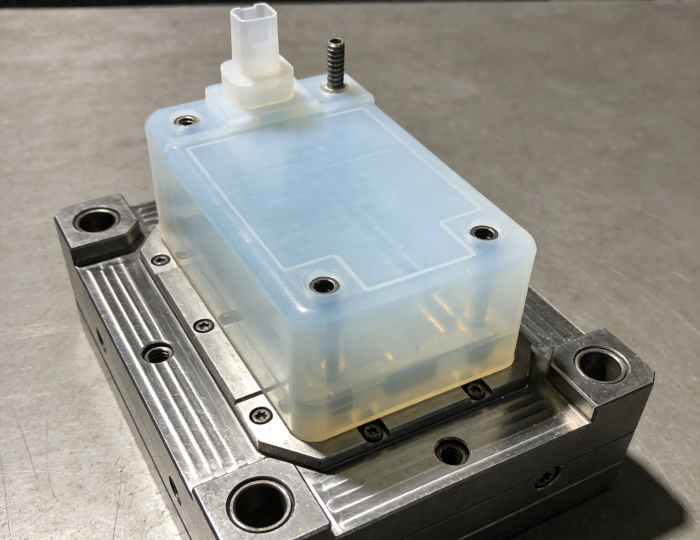
Whether you are designing a high-precision automotive sensor or a soft-touch medical handle, the success of your project hinges on the transition between materials.
At Livepoint, we offer end-to-end expertise in both 2-shot injection molding and custom insert molding. Our engineering team works with you at the design stage to ensure your part geometry facilitates a perfect bond, every time.
Ready to optimize your multi-material design? Contact our engineering team today for a detailed DFM analysis and quote.



 English
  Chinese
  German
  Italian
  Spanish
  French
  Russian
  Arabic
  Japanese
  Korean