

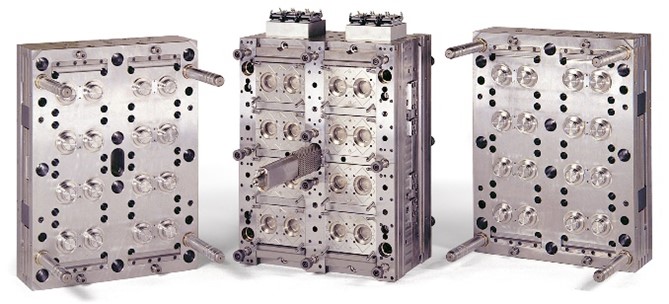
When developing a new product, speed and cost-control during the tooling phase can make or break a project timeline. Rapid tooling addresses both concerns, giving manufacturers a way to produce functional molds and tools in far less time than traditional methods allow. This article explains what rapid tooling is, how it works, the two main approaches used in practice, key factors to consider when selecting a method, and an honest look at its advantages and limitations.
What Is Rapid Tooling?
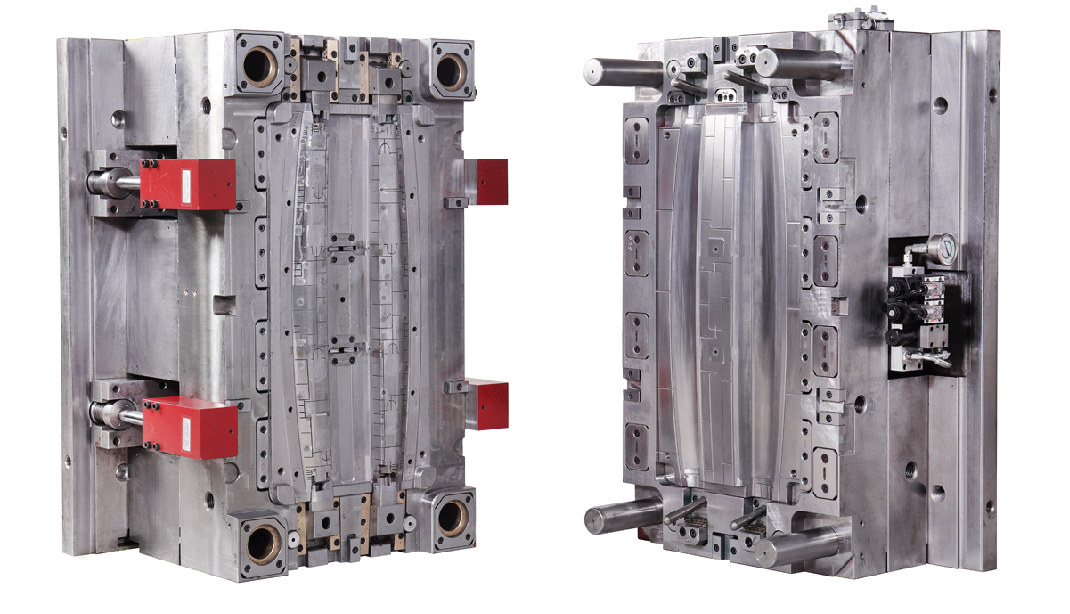
Rapid tooling—sometimes called bridge tooling or prototype tooling—is a step in the product development process that uses accelerated techniques to create molds, dies, and tooling inserts quickly and economically. It typically involves hand-load inserts, stocked mold bases, and mold materials such as aluminum or soft steel rather than the hardened tool steels used for high-volume production tooling.
The goal is to produce a relatively small number of parts—often through low-volume injection molding—that closely mirror what the final production version will look like and how it will perform. Because rapid tooling uses the same materials and molding conditions as production, it gives designers and engineers a realistic picture of part behavior before committing to the considerably higher investment of full production tooling.
Typical uses for rapid tooling include design validation, functional testing, market evaluation samples, and small-batch orders while production tooling is still being completed.
The Two Main Approaches to Rapid Tooling
There are two broad methods for producing rapid molds: the direct approach and the indirect approach. Each has its own workflow, strengths, and trade-offs.
Direct Rapid Tooling
The direct approach fabricates the actual cavity inserts and core directly—typically using additive manufacturing or high-speed CNC machining—without creating an intermediate master pattern. One notable capability of direct tooling is the integration of conformal cooling channels: because the channels are built into the mold geometry rather than drilled in straight lines, they follow the contour of the mold cavity and can reduce cooling time by roughly 66%, leading to shorter cycle times and more uniform part quality.
Advantages of the Direct Approach
- Fast turnaround. Molds can be ready in days or a few weeks rather than months.
- Fewer process steps. Going directly to the tool eliminates the intermediate master pattern stage, keeping the workflow lean.
- Resource-efficient. A single tool can yield multiple prototype parts without large material outlays.
- Design flexibility. Design changes can be incorporated quickly, making this approach well-suited to iterative development and projects where the final geometry is still being refined.
Disadvantages of the Direct Approach
- Limited tool life. Direct rapid tools are generally made from softer materials and may not withstand high shot counts. Repeated design changes or extensive testing cycles can make replacement costs add up.
- Dimensional variability. Producing multiple molds using this method can introduce small differences between them, particularly when different materials are used across mold sets.
Indirect Rapid Tooling
The indirect approach begins with a master pattern—usually produced via additive manufacturing—which is then used to create the mold or die. Soft tooling is the most common technique here: silicone molds are cast around the master pattern and used to produce plastic parts. The same silicone molds can also serve as sacrificial models when casting metal parts.
Advantages of the Indirect Approach
- Longer-lasting master pattern. When made from a durable material, the master pattern can be used repeatedly throughout the production run without replacement, provided the design remains stable.
- Material versatility. The process supports both soft and hard tooling variants, and manufacturers can experiment with different casting or molding materials from a single master.
- Suited to complex geometries. Parts requiring fine surface detail or intricate features are often better served by this method.
Disadvantages of the Indirect Approach
- Longer lead time. Creating the master pattern before the actual tooling adds a step to the process, increasing both time and cost.
- Not ideal for simple parts. For straightforward geometries, the extra complexity of the indirect route is rarely justified. It is best reserved for parts where detailed features genuinely require it.
Choosing Between the Two Methods
Selecting the right approach comes down to four key considerations:
- How much can be allocated to tooling and prototyping? The direct method is generally less expensive upfront.
- How quickly are prototype parts needed? The direct method delivers faster.
- Design complexity. Does the part require fine surface detail, undercuts, or other intricate features? If so, the indirect method may produce better results.
- Design stability. Is the design likely to change during prototyping? If yes, the direct method is more forgiving of design iterations.
Key Factors When Designing Prototype Molds
Regardless of which rapid tooling method is used, two fundamental mold properties require careful attention.
Mold strength. Injection molding machines force heated material into the mold at significant pressure—measured in pounds per square inch. A mold that is insufficiently robust will fail under these loads, resulting in scrapped parts and unplanned downtime. Material selection for the mold should account for the pressures and temperatures involved in the intended molding process.
Mold surface finish. Clean injection and ejection of the part depends on a suitably smooth mold surface. Some rapid tooling processes build up material in layers, which can leave a textured surface. When a smooth finish is required for the molded part, secondary surface finishing operations should be planned into the process.
Advantages of Rapid Tooling in Manufacturing
Lower Development Costs
Rapid tooling materials—aluminum alloys and soft steels—cost considerably less than the hardened steels used for production tooling. Combined with faster production cycles that reduce machine time and labor hours, the overall outlay during the development phase is substantially lower than committing to hard tooling from the start.
Faster Path to Market
Compressing the tooling and prototyping phase means engineers can evaluate and iterate designs sooner, and products can reach their target market earlier. For competitive industries where timing matters, this speed advantage can translate directly into commercial benefit.
Mold Customization
Rapid tooling allows molds to be produced in virtually any required dimensions. Different materials can be run through the same mold for comparison testing, which is particularly useful when the optimal material for a part has not yet been determined.
Thorough Design and Functionality Testing
Because rapid tooling produces parts quickly and in reasonable quantities, teams can run functional tests, assess ergonomics, evaluate assembly fit, and gather user feedback well before production tooling is ordered. New design ideas can be trialed and discarded or adopted rapidly, improving the quality of the final design.
Improved Return on Investment
By front-loading design validation into a lower-cost tooling phase, companies reduce the risk of expensive design changes after full production tooling has been committed. Earlier product launches and lower upfront expenditure both contribute to a faster return on the development investment.
Limitations of Rapid Tooling
Higher Per-Cycle Costs for Extended Runs
Rapid tooling is optimized for low-to-medium volumes. If a project requires extensive iteration across many injection cycles, costs for materials, labor, and mold replacements can accumulate quickly. The per-part economics worsen as shot counts rise beyond what the tooling was designed to handle.
Reduced Mold Longevity
Rapid tools made from aluminum or soft steel wear more quickly than hardened production tooling. Injection pressures and temperatures gradually degrade the mold over time, meaning replacement becomes necessary sooner than with a conventional hardened tool. This is an expected trade-off, not a deficiency, but it must be planned for in the project budget and timeline.
Rapid Tooling vs. Rapid Prototyping: What Is the Difference?
The two terms are sometimes used interchangeably, but they refer to distinct activities. Rapid tooling is specifically about producing the mold or tool itself quickly so that parts can be manufactured through a process like injection molding. The deliverable is a functional mold, and the parts it produces closely replicate production-intent material properties and tolerances.
Rapid prototyping, by contrast, focuses on producing a physical part directly—either as a proof-of-concept model or a functional prototype—without necessarily involving a mold. The technologies most commonly used are additive manufacturing (3D printing) and subtractive manufacturing (CNC machining). Rapid prototyping excels at speed and geometric complexity but may not replicate the material properties of a production injection-molded part as accurately as rapid tooling does.
In many product development programs, the two approaches are used in sequence: rapid prototyping first to validate geometry and fit, followed by rapid tooling to validate material performance and molding behavior before committing to full production tooling.
Bringing Your Design to Life with Rapid Tooling
Rapid tooling is a powerful bridge between initial concept and full-scale production. It reduces financial risk by allowing thorough design validation before expensive hard tooling is ordered, compresses the overall product development timeline, and enables testing with the same materials that will be used in final manufacturing.
For manufacturers seeking a reliable rapid tooling partner, Livepoint Tooling offers rapid tooling services tailored to both prototype and bridge production requirements, covering a broad range of materials and part complexities.




 English
  Chinese
  German
  Italian
  Spanish
  French
  Russian
  Arabic
  Japanese
  Korean