Livepoint delivers high-precision CNC milling services for both prototyping and production, offering consistent quality, tight tolerances, and fast turnaround for projects of any scale.
As a reliable CNC milling service supplier, Livepoint supports your projects with precision machining, stable quality, and efficient production from prototype to small-batch manufacturing.
Tight Tolerances
Livepoint operates a fleet of high-precision 3-axis CNC milling machines, capable of producing accurate parts with tolerances up to ±0.005 mm. Our controlled processes ensure dimensional consistency and dependable performance.
Proven Capabilities
We specialize in manufacturing practical, application-driven parts using 3-axis CNC milling, including brackets, fittings, enclosures, housings, mold components, engine parts, and more.
Fast & Reliable Turnaround
With optimized machining workflows, efficient toolpath planning, and in-house quality inspection, Livepoint delivers CNC milled parts within short lead times, without compromising accuracy or reliability.
10K+
CNC Parts/ Month
14+
CNC Machines
100+
Metal & Plastic Materials
Material Options for Custom CNC Milling Service
Livepoint delivers high-precision CNC milling across diverse materials, with expert guidance to help you choose the most suitable option for your application, performance needs, and cost goals.
Aluminum CNC Milling
Copper CNC Milling
Stainless Steel CNC Milling
Steel CNC Milling
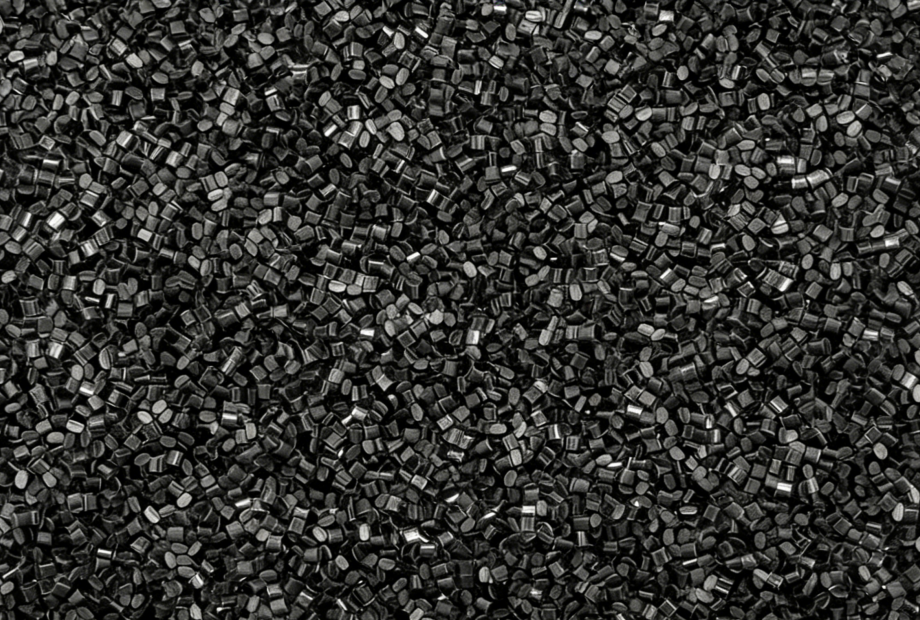
ABS CNC Milling
PC CNC Milling
POM CNC Milling
PP CNC Milling
Finishes for CNC Milling Services
We provide multiple surface finishing solutions for CNC milled components, designed to improve durability, corrosion resistance, and overall appearance.
As Machined
Parts are supplied directly after the milling process, maintaining visible tool marks and tight dimensional tolerances. This finish is suitable for functional parts or components intended for additional processing.
Anodizing
Applied primarily to aluminum parts, anodizing forms a protective oxide layer that enhances corrosion resistance, surface hardness, and wear performance, with optional color finishes available.
Bead Blasting
Bead blasting creates a consistent matte surface by removing machining marks and sharp edges. It is commonly used to achieve a clean, uniform appearance on CNC milled parts.
Polishing
Polishing delivers a smooth or high-gloss surface finish, improving visual quality and reducing friction where precise contact between components is required.
Powder Coating
Powder coating provides a tough, long-lasting surface layer with excellent corrosion resistance. Available in various colors, it is ideal for CNC milled metal parts that require both protection and an enhanced appearance.
Quality Assurance
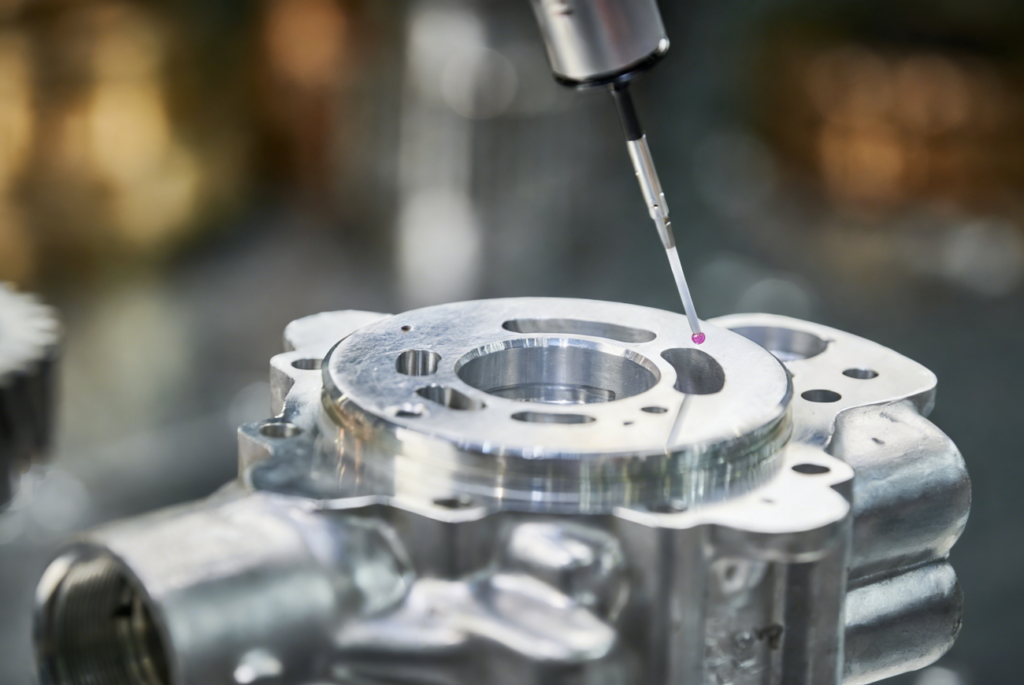
With over 30 quality control instruments and a highly experienced team, we implement a rigorous quality management system. Full-dimension CMM inspections ensure that every CNC milled part, from prototype to mass production, consistently meets international standards and your precise specifications.
Custom CNC milling service is a precision machining process that removes material from solid blocks using computer-controlled milling machines to create parts based on customer-specific designs. It is commonly used to produce prototypes and functional components with accurate dimensions, smooth surfaces, and consistent quality.
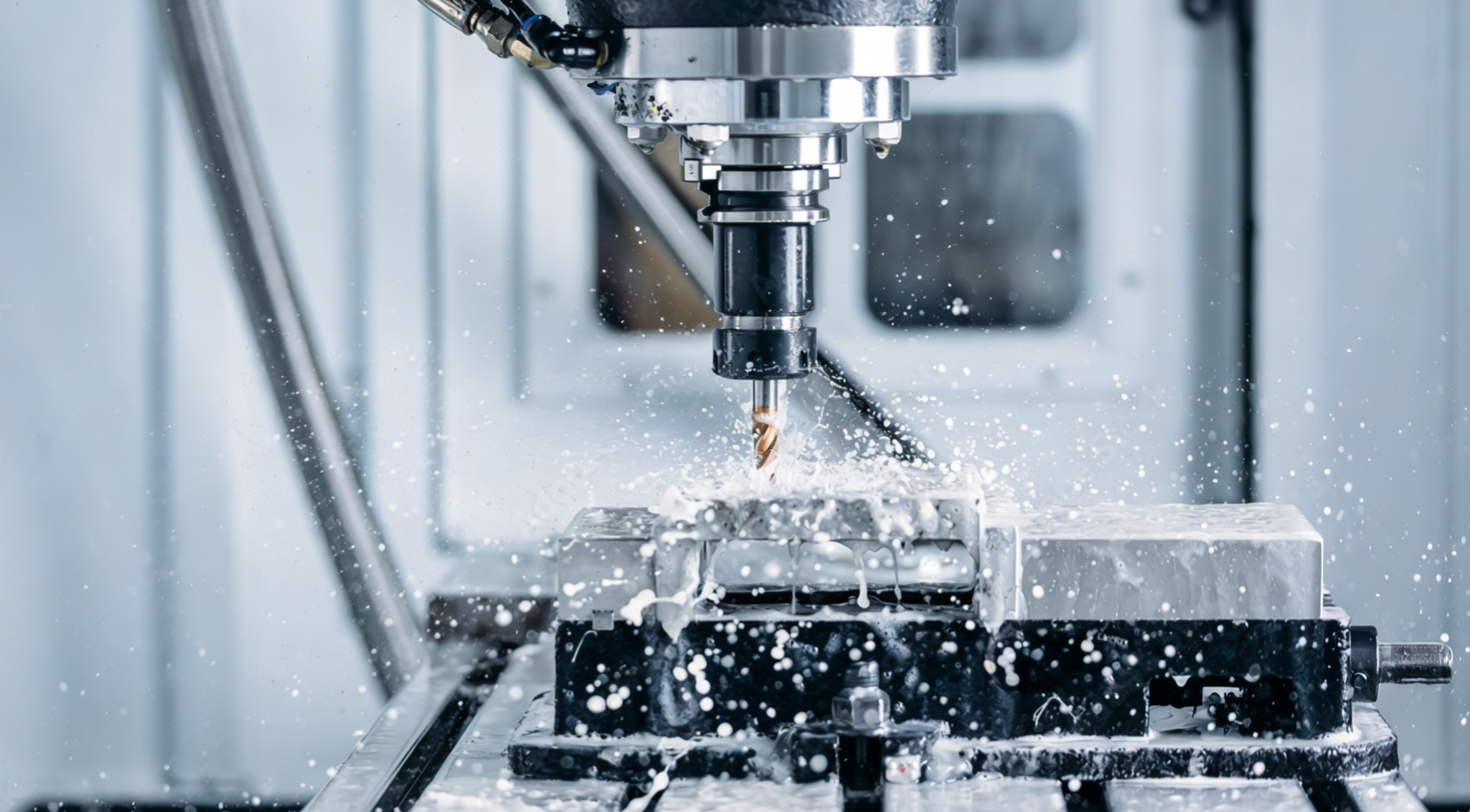
CNC milling begins with a CAD design that is converted into machine instructions. A cutting tool then moves along programmed paths to remove material from the workpiece. In 3-axis CNC milling, the tool operates along the X, Y, and Z axes, making it suitable for machining flat surfaces, pockets, slots, holes, and contoured features in a controlled and repeatable manner.
CNC milling is well suited for parts that require flat surfaces, precise slots, grooves, and step features. It is also commonly used as a secondary operation to add functional details to parts produced by CNC turning, 3D printing, or molding, ensuring tighter tolerances and improved surface quality.
Several factors influence CNC milling costs, including material type, part size, machining time, design complexity, tolerance requirements, and order quantity. Additional considerations such as surface finishing, inspection standards, and lead time can also impact the final price.
CNC milling offers high dimensional accuracy, excellent repeatability, and flexibility in material selection. It supports rapid prototyping and low-to-medium volume production while maintaining consistent quality, making it ideal for functional and structural components across various industries.
CNC milling removes material using a rotating cutting tool while the workpiece remains stationary, making it suitable for prismatic parts with flat surfaces and detailed features. CNC turning, by contrast, rotates the workpiece while a fixed tool shapes it, which is more suitable for cylindrical or round components such as shafts and bushings.