

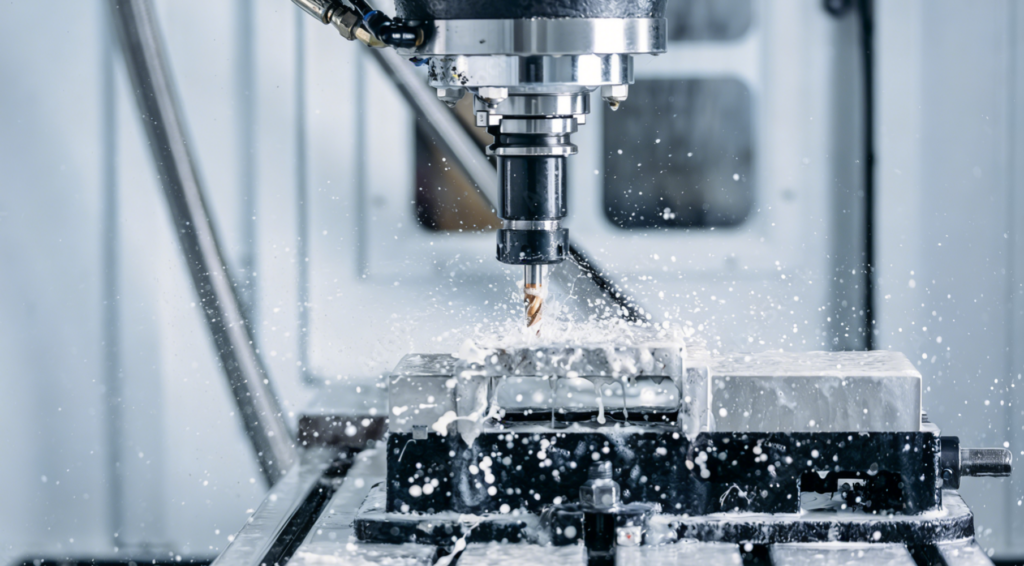
CNC machining is one of the most widely used manufacturing processes in modern industry. The term CNC stands for Computer Numerical Control—a method in which computers direct the movement of machine tools to shape raw stock into finished, custom-designed parts. By automatically removing material from a workpiece according to a digital program, CNC machining delivers consistent precision at speeds that manual operations simply cannot match.
This guide covers the fundamentals of CNC machining: how the process works, what machines and tooling are involved, which operations are most common, what materials are compatible, and when alternative processes might be a better fit.
How CNC Machining Works
At its core, CNC machining is a subtractive manufacturing process. Starting with a solid block, bar, or sheet of material—often called the blank or workpiece—the machine progressively removes material using cutting tools until the desired geometry is achieved. This stands in contrast to additive manufacturing (3D printing), which builds up material layer by layer to form a part.
The process evolved from earlier Numerical Control (NC) technology, which relied on punched paper tape to deliver machining instructions. When digital computers became practical in the late 1960s, they replaced the tape-based approach, giving rise to the far more flexible CNC systems used today. CNC controls can also be integrated into non-traditional machines such as laser cutters, plasma cutters, water jet cutters, and electrical discharge machining (EDM) equipment.
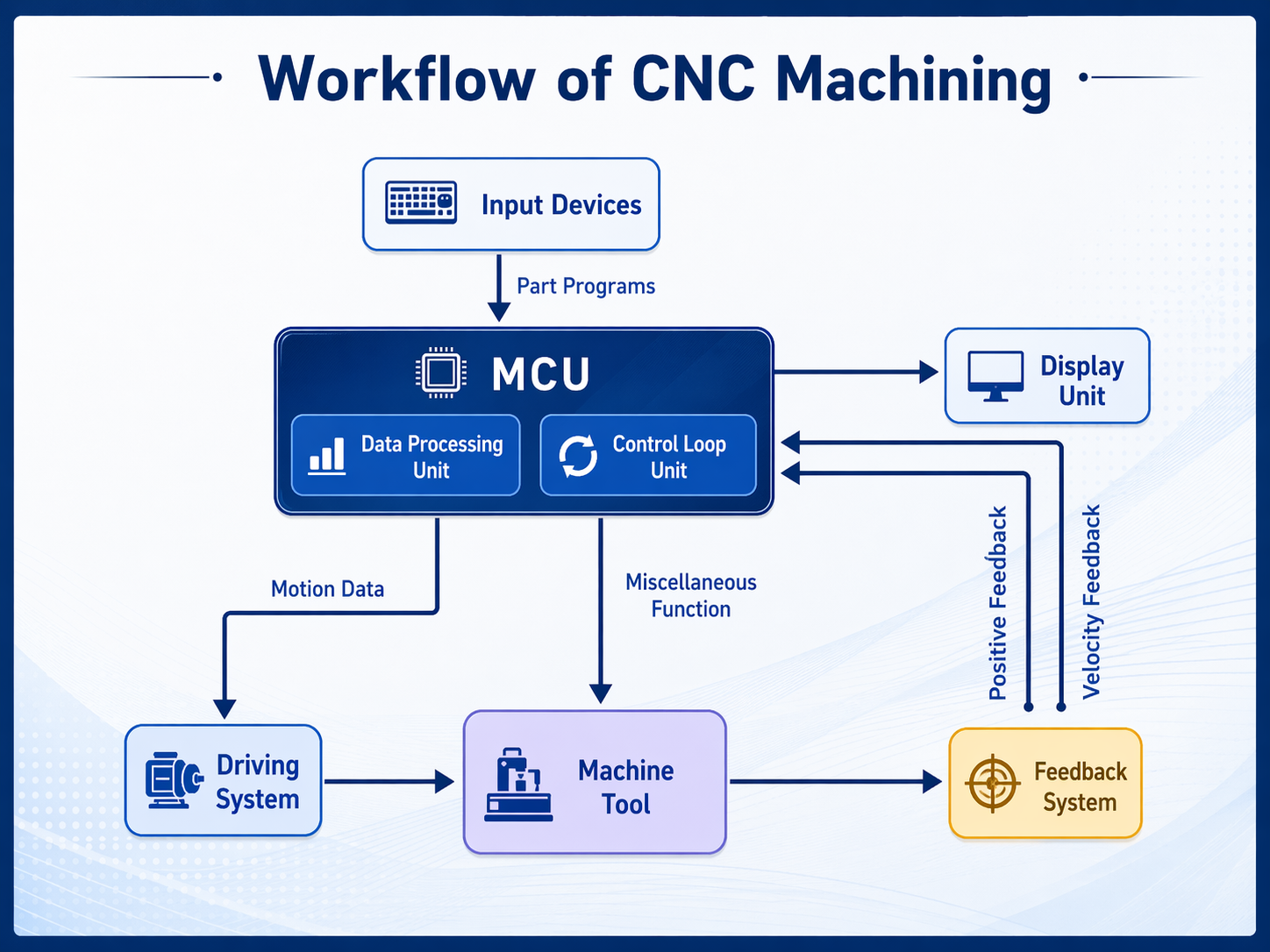
The Four Stages of a CNC Machining Job
- Designing the CAD model. Every CNC job begins with a 2D vector or 3D solid model created in Computer-Aided Design (CAD) software. The model captures all dimensions, geometrical features, and tolerances required for the finished part.
- Converting the CAD file to a CNC program. The CAD file is imported into Computer-Aided Manufacturing (CAM) software, which generates a set of machine instructions—primarily G-code—that tell the CNC controller exactly where to move the tool, how fast to feed it, and how deep to cut.
- Preparing the machine. The operator secures the workpiece to the machine’s worktable or a workholding fixture, loads the required cutting tools into the spindle or turret, and sets the home position (the coordinate origin) on the stock material.
- Executing the machining operation. With setup complete, the machine runs the CNC program autonomously, moving the cutting tool along the programmed paths until the part is finished. After machining, the part is inspected and, if necessary, sent for secondary finishing operations.
CNC Machine Components and Tooling
While specific configurations vary by machine type, most CNC machining centers share a common set of core components.
- Machine interface. The control panel through which the operator loads programs, sets parameters, and monitors the machining process.
- The rotating shaft that holds and drives the cutting tool (in mills) or the workpiece (in lathes). Spindle speed is a critical parameter that influences surface finish and tool life.
- Axes of motion. CNC machines operate along linear axes (X, Y, Z) and, on more advanced models, rotational axes (A, B, C). 3-axis machines handle the majority of standard work; 5-axis machines can approach a workpiece from virtually any angle in a single setup, enabling highly complex geometries.
- The surface on which the workpiece is clamped or fixtured. Some machines have a stationary table with a moving spindle; others move the table itself.
- Coolant system. Delivers cutting fluid to the tool-workpiece interface to reduce heat, flush chips away, and extend tool life.
- Automatic Tool Changer (ATC). Present on most machining centers, the ATC stores multiple tools in a carousel and swaps them automatically during the program, eliminating manual tool changes between operations.
Key Software Applications
The CNC machining process relies on several software categories working in sequence:
- CAD (Computer-Aided Design): Used to create the part model. Common platforms include SolidWorks, Autodesk Inventor, and CATIA.
- CAM (Computer-Aided Manufacturing): Converts the CAD model into machining instructions (toolpaths, feeds, speeds) and generates the G-code file.
- CNC controller software: Resides on the machine itself and interprets the G-code, translating it into coordinated motor movements in real time.
Common CNC Machining Operations
CNC machining encompasses a broad family of operations. The most frequently encountered mechanical processes include the following.
CNC Milling
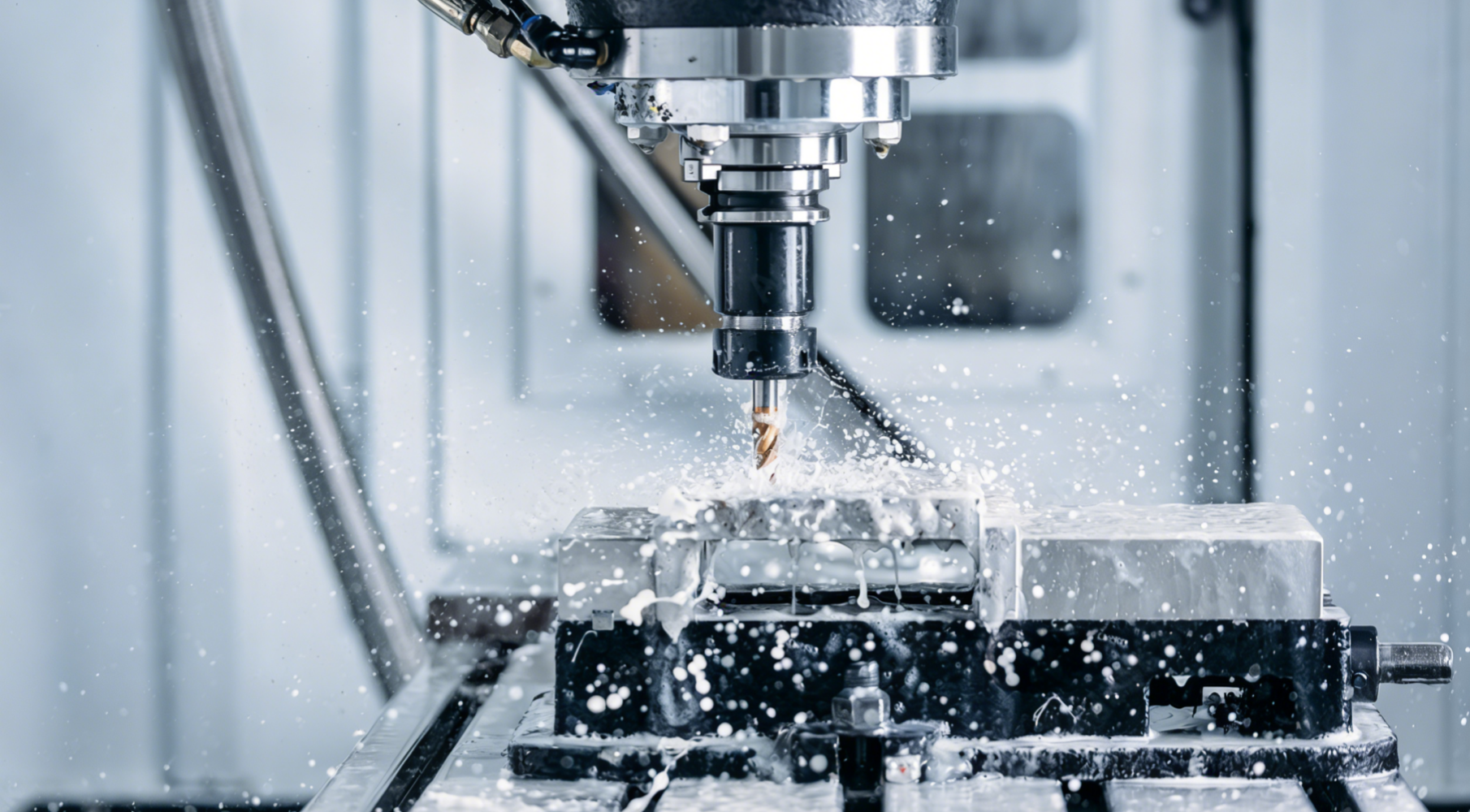
Milling uses a rotating multi-point cutter to remove material from a stationary (or indexed) workpiece. The cutter can be moved along multiple axes to produce flat surfaces, slots, pockets, contours, and complex 3D profiles. Vertical machining centers (VMCs) are the most common configuration for general milling work, while horizontal machining centers (HMCs) offer advantages in chip evacuation and multi-side machining for high-volume production.
CNC Turning
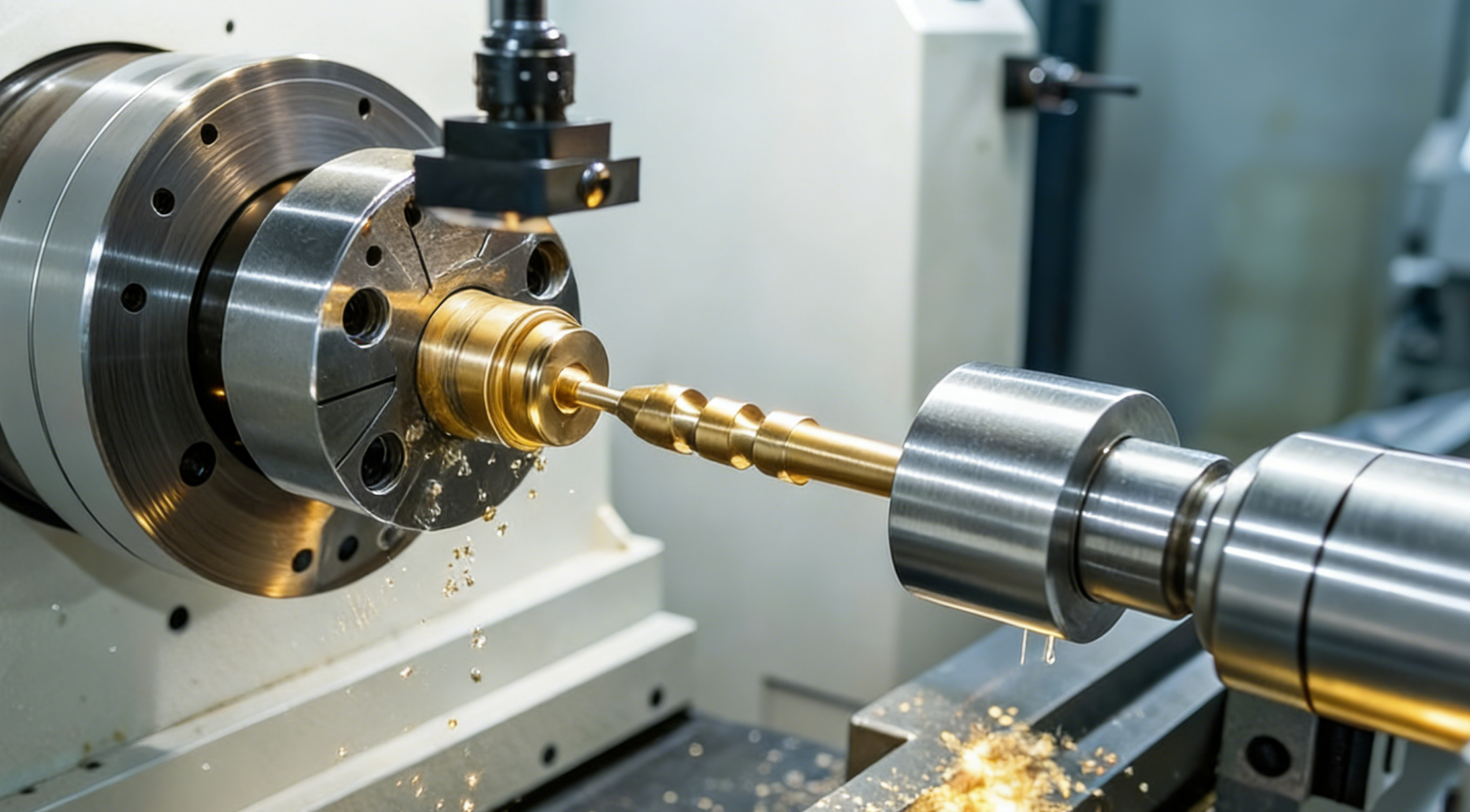
In turning operations, the workpiece rotates against a stationary cutting tool. CNC lathes produce cylindrical or conical shapes—shafts, bolts, pins, and similar round components—with high accuracy. Modern CNC turning centers often include live tooling (rotating milling/drilling tools), enabling milling and drilling operations in the same setup and reducing the number of machine setups required.
Drilling and Boring
Drilling creates circular holes using a rotating drill bit pressed axially into the workpiece. Boring refines an existing hole to a precise diameter and finish using a single-point cutting tool. Both operations are commonly performed on milling centers as part of a larger program.
Grinding
CNC grinding uses abrasive wheels to achieve very tight dimensional tolerances and fine surface finishes that are difficult to reach with conventional cutting tools. It is widely applied to hardened workpieces, such as tool steel components, where conventional milling or turning would cause rapid tool wear.
Additional Mechanical Operations
CNC controls are also applied to tapping (cutting internal threads), reaming (finishing holes to close tolerances), broaching (producing keyways or internal profiles), and multi-axis contouring for aerospace-grade complex surfaces.
Non-Mechanical CNC Processes
Beyond traditional tool-cutting, CNC technology drives a variety of non-mechanical material removal methods. Chemical machining processes include chemical milling, blanking, and engraving. Electrochemical methods include electrochemical deburring and grinding. Thermal processes—which use heat rather than physical force—encompass laser cutting, plasma arc cutting, electron beam machining, and electrical discharge machining (EDM). These non-conventional approaches are particularly valuable for hard or brittle materials and for intricate features that resist conventional tooling.
Compatible Materials
One of CNC machining’s greatest strengths is its compatibility with a wide range of materials. Common categories include:
- Metals: Aluminum alloys (6061, 7075), steels (mild, tool, stainless), titanium, copper, brass, bronze, magnesium, and specialty alloys such as Inconel.
- Engineering plastics: ABS, polycarbonate (PC), nylon (PA), acetal (POM), PEEK, UHMW-PE, and others.
- Composites: Carbon fiber reinforced polymers and fiberglass laminates.
- Other: Wood, foam, and certain glass and ceramic materials.
Material selection influences cutting speeds, tool selection, coolant strategy, and achievable tolerances, so it is important to specify material requirements clearly at the design stage.
Advantages of CNC Machining
CNC machining offers a compelling set of advantages that explain its dominance across manufacturing industries:
- High precision and repeatability. Tolerances of ±0.01 mm or tighter are routinely achievable, and the same program can produce identical parts run after run.
- Material versatility. No other single process handles such a wide range of metals, plastics, and composites.
- Scalable production. CNC machining is cost-effective for one-off prototypes as well as medium-volume production runs; the same digital program is reused without additional tooling investment.
- Reduced labor dependency. Once a program is validated, the machine runs largely unattended, freeing skilled operators for setup and quality verification tasks.
- Design flexibility. Changes to part geometry require only a software update to the CNC program—no new molds, dies, or fixtures are needed.
Limitations and Challenges
CNC machining is not without constraints. Being a subtractive process, it generates material waste, which increases per-part cost for expensive stock material. Complex parts with deep undercuts, very thin walls, or internal features that tools cannot physically reach may require specialized multi-axis setups, EDM, or secondary operations. For very high production volumes, dedicated casting or forging processes are often more economical. Machining extremely large or heavy workpieces also introduces practical challenges around workholding, machine capacity, and maintaining dimensional accuracy over long travel distances.
Industry Applications
CNC machining finds use in virtually every sector that requires precision-made components. Key industries include:
- Aerospace: Structural frames, engine components, brackets, and housings machined to extremely tight tolerances from aluminum, titanium, and high-temperature alloys.
- Automotive: Engine blocks, transmission parts, suspension components, and prototypes for new vehicle programs.
- Medical: Surgical instruments, orthopedic implants, and diagnostic device housings where biocompatibility and dimensional accuracy are critical.
- Consumer electronics: Enclosures, heat sinks, connectors, and structural frames for smartphones, laptops, and other devices.
- Energy and power generation: Turbine blades, pump housings, valve bodies, and hydraulic components.
- Construction and agriculture: Heavy equipment components, fittings, and custom hardware.
Alternatives to CNC Machining
Depending on part geometry, production volume, and material requirements, other manufacturing processes may be more suitable or cost-effective:
- 3D printing / additive manufacturing: Ideal for complex organic geometries and very low quantities where material waste would be prohibitive. Generally slower and less precise than CNC for tight-tolerance metalwork.
- Injection molding: The preferred choice for high-volume plastic parts once tooling investment is justified by large quantities.
- Casting and forging: Cost-effective for large-volume metal parts with simpler geometries, though often requiring secondary CNC machining to reach final tolerances.
- Sheet metal fabrication: Better suited for thin-walled enclosures, brackets, and chassis parts where forming and welding are more efficient than material removal.
Selecting the right process depends on a careful analysis of part requirements, expected volumes, tolerances, lead time, and budget. In many cases, a hybrid approach—rough-casting a part and then finish-machining critical surfaces—delivers the best combination of cost and precision.
Getting Your CNC Parts Made
Whether you need a single functional prototype or a batch of production components, choosing the right machining partner is as important as choosing the right process. A capable CNC supplier will review your design for manufacturability, recommend material and tolerance strategies, and deliver parts on time to specification.
For high-precision CNC machining services—including milling, turning, and EDM across metals and plastics—visit Livepoint Tooling to learn about their capabilities and request a quote.


 English
 Chinese
 German
 Italian
 Spanish
 French
 Russian
 Arabic
 Japanese
 Korean