


Across the globe, injection molding remains a premier manufacturing method for plastic components due to its remarkable speed, uniformity, and economic efficiency. This process serves a diverse array of sectors, including automotive, medical technology, aerospace, and consumer electronics. While single-cavity molds are often the starting point for prototyping, transitioning to multi-cavity systems is a strategic move for organizations aiming to scale production and optimize output.
Defining Multi-Cavity Injection Molding
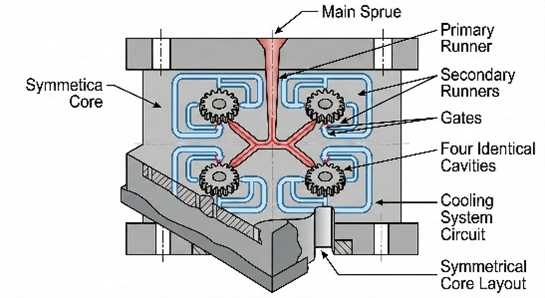
The standard approach to molding involves a single-mold configuration where one cavity produces one part per cycle. In contrast, multi-cavity molding utilizes a specialized tool designed to create several identical parts simultaneously within a single injection shot.
Typically, these tools are configured to produce two, four, eight, or even more parts at once. While this method is most frequently associated with high-volume mass production, it is increasingly being utilized for lower-volume runs where the time-to-market and consistency of multiple parts are critical.
Before committing to this tooling path, designers should evaluate:
- The balance between design complexity, target quantities, and budget.
- How specific part geometries dictate the feasibility of multi-cavity layouts.
- The impact on the overall product development lifecycle.
The Strategic Advantages of Multi-Cavity Systems
The decision to move toward multi-cavity tooling is generally driven by two factors: meeting high demand and lowering the cost per individual unit.
While engineering teams often prioritize design validation and functional performance at lower volumes, procurement and operations teams focus heavily on the “piece-part price.” Generally, an increased initial investment in a multi-cavity tool results in a significantly lower per-part cost over the life of the project.
However, more cavities do not automatically translate to better cost-efficiency. The total value depends on several variables, including the complexity of the tool and the volume of the production run. Finding the “crossover point”—where the savings on parts outweigh the higher upfront tool cost—is the key to a successful ROI.
Geometry and Complexity Constraints
Not every component is a candidate for multi-cavity production. The part’s physical layout and geometric intricacies play a major role in determining if this method is viable. While standard design principles for injection molding still apply, certain features require specialized attention.
Gating Strategies
Gating is the mechanism that allows molten resin to enter the mold cavity, holding it under pressure until solidification occurs. In single-cavity molds, designers often use pin-style or hot-tip gates to manage complex geometries and minimize “vestige”—the small remnant of plastic left at the entry point.
In multi-cavity environments, direct gating options are often limited. Instead, these systems typically rely on a runner or tab system to distribute the plastic evenly across all cavities. This requires careful planning to ensure balanced flow and consistent part quality across the entire mold.
Mechanisms and Manual Inserts
Features that require side actions or manual “pick-outs” (such as metal blocks placed in the mold to create internal cutouts) are easily managed in single-cavity tools. However, these manual processes become highly inefficient when scaled to a multi-cavity tool. For instance, manually loading inserts into an eight-cavity mold significantly increases cycle times and labor costs. If high-volume production is the goal, these manual design elements should be engineered out of the part whenever possible.
Differentiating Between Family and Multi-Cavity Tooling
It is important to distinguish between multi-cavity molds and “family” molds.
- Multi-Cavity Molds: Feature multiple identical cavities to produce several versions of the exact same part.
- Family Molds: Contain different cavity designs within one tool—such as a left-hand and right-hand housing that are designed to fit together.
Family molds are often chosen for cost-saving reasons, but like multi-cavity tools, their success depends entirely on whether the different parts share similar geometries and resin requirements.
Practical Applications Across Industries
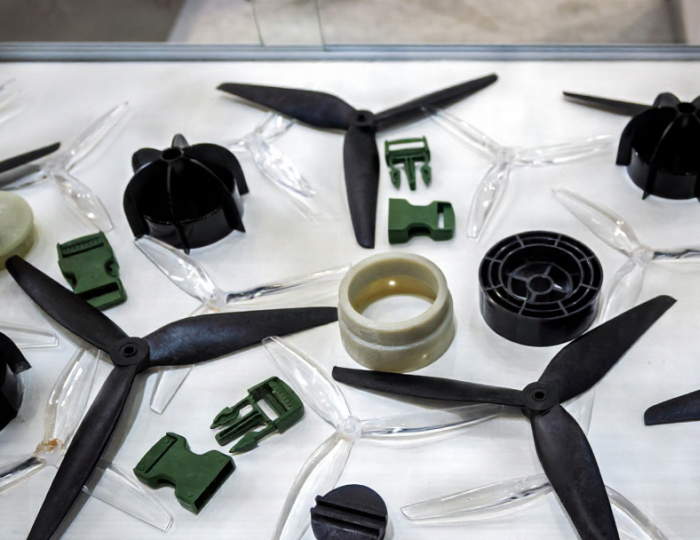
Multi-cavity tooling is utilized across nearly every major manufacturing sector:
- Automotive: For high-volume production of fasteners, interior trim components, and connectors.
- Construction: To manufacture commodity items like closures, fittings, and specialized hardware.
- Medical & Medtech: For the production of disposable diagnostic components and handheld device casings.
- Consumer Electronics: For internal structural components and protective housings.
Choosing a multi-cavity approach is a significant step in the manufacturing process. It requires a deep understanding of production demands and technical design constraints to ensure the investment pays off. For more information on optimizing your production workflow, visit Livepoint Tooling.




 English
  Chinese
  German
  Italian
  Spanish
  French
  Russian
  Arabic
  Japanese
  Korean